

Imagine a company that collects thousands of data points every day — from sales, customers, logistics, marketing, and even production sensors. Now imagine all that information scattered across different spreadsheets, systems, and reports. Hard to make quick decisions that way, isn’t it?
That’s exactly the challenge Databricks was built to solve. In a world where data is a company’s most valuable asset, understanding what Databricks is used for means understanding how to turn informational chaos into clarity and competitive advantage.
More than just a platform, Databricks is a complete environment that unifies Data engineering, analytics, and artificial intelligence in one place. It combines the power of Data Lakes with the organized structure of Data Warehouses, creating a modern architecture known as a lakehouse.
The result? Faster processes, integrated teams, and smarter decisions — all powered by reliable, real-time data. In this article, you’ll discover how Databricks works, what it’s used for, and why it’s becoming the foundation of truly data-driven companies.
What is Databricks used for?
Databricks is a unified analytics platform built on Apache Spark that aims to simplify and accelerate the entire data lifecycle, Big Data processing, and Machine Learning (ML) workflows. It was designed to solve the problem of fragmentation and complexity in large-scale data engineering, providing a single, high-performance environment for processing, transforming, and analyzing massive datasets.
Na prática, a plataforma permite que engenheiros, analistas e cientistas de dados trabalhem de forma colaborativa. O que torna isso possível é sua arquitetura moderna de lakehouse, que funde a capacidade de armazenamento de dados brutos de um Data Lake com a performance e a governança de um Data Warehouse.
With Databricks, a company can:
- Centralize all its data in one place, regardless of the source (databases, ERPs, APIs, legacy systems, or IoT).
- Process large volumes of data with high performance, leveraging the power of Apache Spark, the core technology behind the platform.
- Create automated pipelines for data ingestion and transformation.
- Lakehouse Architecture: Combines the flexibility of Data Lakes with the performance and governance of Data Warehouses.
- Develop and train Machine Learning and Artificial Intelligence models in an integrated environment.
In summary, Databricks is designed to eliminate information silos, reduce technical complexity, and make data truly accessible to every team in the company — from technology to business.
By centralizing the entire data lifecycle in a single environment, Databricks enables faster and more confident decision-making, driving a data-driven culture across organizations.
Main Features of Databricks
The real differentiator of Databricks lies in how it brings together, within a single platform, features that previously required multiple systems and tools. This makes working with data simpler, faster, and more collaborative — which explains why so many companies want to understand what Databricks is used for and how to apply it to their operations.
Here are the main features that make Databricks a complete platform for data and artificial intelligence:
1. Scalable Big Data Processing
Databricks is built on Apache Spark, one of the most powerful frameworks in the world for distributed data processing. This allows the platform to handle terabytes or even petabytes of data in just minutes — ideal for companies that need to process information from multiple sources (ERP, CRM, e-commerce, IoT, social media, and more).
2. Data Pipeline Creation and Automation
With Delta Live Tables (DLT), it’s possible to build reliable data pipelines in a declarative way, where the platform takes responsibility for the quality, consistency, and evolution of tables. To ensure everything runs on time, Databricks Workflows (Jobs) orchestrates and automates the entire process. The benefit is clear: less time spent on maintenance and more up-to-date data, ready to support business decisions.
3. Connection Between Technology and Business
Databricks innovated by creating the Lakehouse architecture, which ends the dilemma between Data Lakes (flexibility and low cost) and Data Warehouses (structure and performance). This integration is made possible by Delta Lake — the storage layer that brings reliability, ACID transactions, and versioning to raw data. The result is a unified environment with high performance, governance , and scalability — without data duplication across different systems.
4. Machine Learning and Artificial Intelligence
Databricks simplifies the development of predictive and AI models. With MLflow integrated, it’s possible to train, version, and deploy machine learning models within the platform itself, without having to move data to other environments. This reduces costs, increases security, and speeds up data science project delivery.
5. Collaboration between data and business teams
The platform offers collaborative notebooks that allow engineers, analysts, and data scientists to work together in the same space. These notebooks support multiple languages (Python, SQL, R, Scala) and can be directly connected to visualization tools such as Power BI or Tableau, making Databricks a bridge between technical teams and decision-makers.
6. Data governance, security, and quality
Unity Catalog serves as the central control point for all your data and AI assets. It centralizes the management of permissions, catalogs, and metadata, applying SQL-based access rules consistently across all workspaces and clouds. This unified governance is crucial — along with automatic auditing and lineage tracking — to ensure compliance with regulations such as Brazil’s LGPD, allowing the company to protect sensitive data and maintain operational transparency.
These features make Databricks a platform that goes far beyond data storage and analysis. It becomes an intelligence ecosystem — combining infrastructure, automation, and collaboration to turn data into strategic value.
Difference Between Databricks and Other Data Platforms
When it comes to modernizing data architecture, it’s common to see comparisons between Databricks and other solutions available in the market. After all, many companies already use traditional Data Warehouses, Data Lakes, or cloud analytics platforms such as Snowflake, BigQuery, or Azure Synapse.
But what really sets Databricks apart from these tools?
The main difference lies in its concept of total integration. While most platforms specialize in only one part of the data lifecycle — storage, processing, or analysis — Databricks was designed to unify all these stages within a single environment.
Here’s how this difference plays out in practice:
1. Data Warehouse vs. Databricks
Traditional Data Warehouses are excellent for storing structured data and performing fast SQL analyses. However, they have limitations when it comes to handling raw, unstructured, or real-time data.
Databricks, on the other hand, combines the best of both worlds: it allows companies to store data in any format (structured, semi-structured, or unstructured) and process it with high performance, while maintaining the robust analytical capabilities of traditional warehouses.
2. Hadoop vs. Databricks
Hadoop was a pioneer, but its on-premise architecture tightly coupled storage (HDFS) and processing (MapReduce), making it rigid, slow, and complex to manage. Databricks represents the natural evolution: it’s cloud-native, decoupling processing from storage — allowing both to scale independently and optimize costs. In addition, it replaces Hadoop’s slow disk-based processing with Apache Spark’s in-memory speed. In practice, where Hadoop was a complex “toolbox,” Databricks delivers a unified, managed platform for ETL, SQL, and Machine Learning, enabling teams to focus on creating value instead of managing infrastructure.
3. Snowflake vs. Databricks
While Snowflake focuses on Data Warehousing and SQL analytics, Databricks goes further by also integrating data engineering, machine learning, and artificial intelligence. Databricks also tends to be more cost-effective than Snowflake in scenarios that require heavy processing, such as ETL pipelines and large-scale analytics, since it optimizes compute and storage resources more efficiently. In many cases, companies even combine the two platforms — using Snowflake as a storage layer and Databricks as a processing and predictive modeling environment.
4. BigQuery x Azure Synapse x Databricks
While BigQuery (Google) and Azure Synapse (Microsoft) are exceptional cloud Data Warehouses, optimized mainly for high-speed SQL analytics and Business Intelligence (BI), Databricks positions itself as a complete Lakehouse platform. The fundamental difference lies in scope: Databricks is designed to cover the entire data lifecycle. It not only performs high-performance SQL analytics (competing directly with traditional DWHs), but also natively integrates data engineering (streaming, ETL) and, crucially, the entire Data Science and Machine Learning workflow. In practice, it allows engineers, analysts, and data scientists to collaborate on the same datasets (including unstructured data like video and text), from raw ingestion to production-ready AI.
5. The Role of Open Source and the Databricks Ecosystem
Another key differentiator is the platform’s open-source DNA. Databricks is the creator and main maintainer of technologies such as Delta Lake (transactional storage), MLflow (machine learning lifecycle management), and Apache Spark (distributed processing). This ensures constant innovation, interoperability, and a global active community — factors that strengthen the ecosystem and reduce the risk of dependency on a single vendor (vendor lock-in).
In summary, while other tools focus on solving isolated parts of the problem, Databricks exists to integrate everything — data, people, processes, and technology — into a single, intelligent workflow.
Databricks: Benefits in a Data-Driven Strategy
Databricks serves as the technological foundation for building a data-driven culture, unifying all the infrastructure needed to collect, process, analyze, and apply information in real time. More than just storing data, it creates an environment where intelligence flows across business areas, seamlessly connecting technology and strategy.
Here’s how Databricks enhances a data-driven strategy:
1. Data Centralization and Reliability
Data-driven companies depend on the quality and integrity of their information. Databricks solves the problem of data dispersion by bringing all sources together into a single, governed, and versioned environment (using Unity Catalog and Delta Lake). This ensures that everyone works with the same version of the truth, avoiding conflicts and inconsistencies across reports and analyses.
2. Scalability and Agility for Analytics
With Databricks, companies can analyze data continuously and at scale — without performance bottlenecks. This capability is essential for organizations that need to react quickly to market changes, whether by adjusting prices, forecasting demand, or monitoring operations in real time.
3. Connection Between Technology and Business
Databricks fosters natural collaboration between technical and strategic teams. Data engineers structure and make data available; analysts create dashboards and reports; data scientists train predictive models — all within the same environment. This reduces internal barriers and accelerates the decision-making cycle, enabling business areas to use data autonomously and reliably.
4. Support for ML and Automation
A truly data-driven company doesn’t rely only on dashboards. It seeks to automate decisions and continuously create value through artificial intelligence. Databricks enables this journey by offering native infrastructure for machine learning, predictive modeling, and feature engineering, turning data into automated actions and predictive insights.
5. Evolution of Analytical Maturity
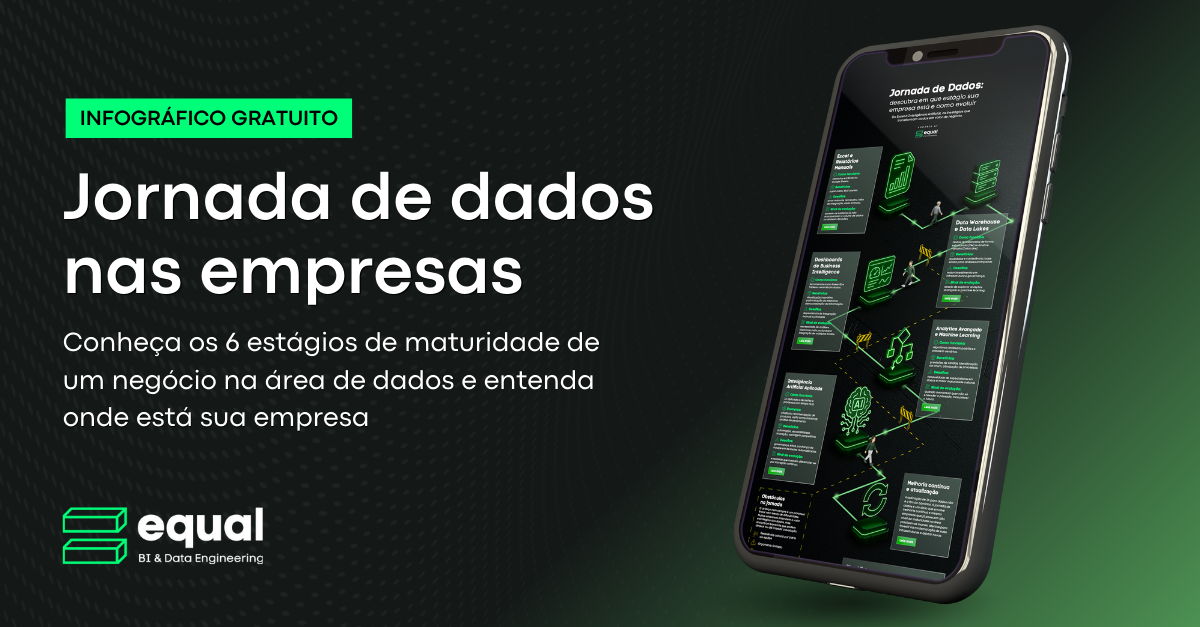
Many companies are still in the early stages of their data journey , relying on spreadsheets and manual reports. Databricks accelerates this evolution by providing a modern and scalable foundation that supports structured growth. It’s the natural next step for organizations looking to move from descriptive analytics to predictive and prescriptive analytics, reaching a new level of analytical maturity.
Challenges and Key Considerations When Using Databricks
Although Databricks offers a wide range of benefits, it’s important to recognize that its adoption requires planning, maturity, and a solid foundation of data governance. Like any advanced technology, it demands cultural, technical, and operational adjustments.
Understanding the main challenges before implementation is essential to ensure the investment delivers the expected return.
1. Team Learning Curve
Databricks is a robust platform with multiple capabilities, ranging from data engineering to data science. This requires training and upskilling teams so they can take full advantage of the tool’s potential. Without proper preparation, there’s a risk of underutilization or misconfiguration, which can negatively impact both performance and costs.
2. Need for a Well-Defined Architecture
Before adopting Databricks, a company must have a clear understanding of how its data is organized, what the sources of information are, and which processes need to be automated. Without a proper technical design — integrating Data Lake, pipelines, and governance — the platform may become underutilized or create redundancies.
3. Usage Costs and Scalability
Although Databricks offers consumption-based pricing, a lack of monitoring can lead to higher-than-expected costs. It’s important to define execution limits, scheduling, and usage policies to avoid waste, especially in shared environments.
4. Integration with Legacy Systems
Companies that still rely on legacy systems may face challenges when connecting their data sources to Databricks. In such cases, it’s essential to have a gradual modernization strategy that enables the integration of new technologies without disrupting critical business processes.
5. Data Governance and Security
With large volumes of information in circulation, governance must be a priority from the very beginning. The Unity Catalog, for example, is a powerful tool — but it requires proper configuration and clear policies for access control, versioning, and compliance.
6. Cultural Change and Organizational Adoption
The success of Databricks doesn’t depend solely on the technical team. It’s essential for the entire organization to understand the value of data and adopt a collaborative mindset, where decisions are guided by evidence, not intuition.
Despite these challenges, most of them can be overcome with strategic planning and support from aspecialized data consultancy. With a well-designed architecture, solid governance, and continuous training, Databricks becomes one of the most powerful platforms for turning data into competitive advantage.
How to Start Using Databricks
Implementing Databricks is a decision that can redefine how your company handles data — but the success of this process depends on planning, governance, and a clear execution roadmap. Here are the essential steps to start using Databricks safely, efficiently, and in alignment with your business goals:
1. Assess Your Company’s Data Maturity
First of all, it’s important to understand where your organization stands in its data journey. Companies that still rely heavily on spreadsheets and manual reports have different needs than those that already have Data Warehouses or integrated BI systems. This diagnosis is the starting point for defining the scope, investment, and priorities of the project.
2. Define Goals and Success Indicators
Databricks is a powerful platform, but its true value only emerges when it’s connected to concrete goals — such as reducing processing costs, speeding up reporting, or developing predictive models. Defining success indicators from the start helps measure ROI and guide technical decisions.
3. Choose the Cloud and Configure the Environment
Databricks can be deployed on the major cloud providers — AWS, Azure, and Google Cloud — offering flexibility and integration with existing infrastructures. At this stage, it’s important to configure workgroups, permissions, and processing clusters, ensuring security and governance from day one.
4. Connect Your Data Sources
The next step is to integrate all relevant data sources: databases, ERPs, CRMs, APIs, spreadsheets, and even IoT sensors. This centralization enables the company to build a single, reliable view of its information, which serves as the foundation for advanced reporting and analytics.
5. Build Pipelines and Automated Processes
With the environment configured, it’s time to create automated data pipelines responsible for collecting, transforming, and delivering data in real time. Using Delta Live Tables and versioning features ensures traceability and consistency across information flows.
6. Empower Teams and Foster Collaboration
Adopting Databricks requires both technical training and cultural change. Offer training sessions for engineers, analysts, and data scientists — and encourage cross-department collaboration so everyone speaks the same “data language.”
7. Monitor, Optimize, and Scale
After the initial implementation, the key is to continuously monitor performance, optimize costs, and explore new use cases. Over time, Databricks can evolve from a technical tool into a strategic innovation engine, supporting AI, automation, and advanced analytics initiatives.
More than just understanding what Databricks is used for, it’s essential to see its role as the driving force behind companies’ digital and analytical transformation. It brings together the best of data engineering, analytics, and artificial intelligence in a single platform — simplifying processes, connecting teams, and enabling organizations to make faster, data-driven decisions.
Databricks represents a new way of thinking about data: less technical complexity, more collaboration, and greater strategic value. With it, companies move beyond simply storing information to truly creating intelligence — whether by predicting trends, automating processes, or optimizing operational results.
But for all this to happen in a structured way, it’s essential to have a solid foundation of architecture, governance, and performance. At Equal BI, we help companies implement and optimize Databricks with a results-driven focus — from data maturity assessment to full-scale operation. We combine data engineering, BI, and business intelligence to turn your analytical environment into a strategic asset.
Want to know if Databricks is the next step in your company’s data journey? Talk to our experts and discover how to turn your data into intelligence — and your intelligence into results.


